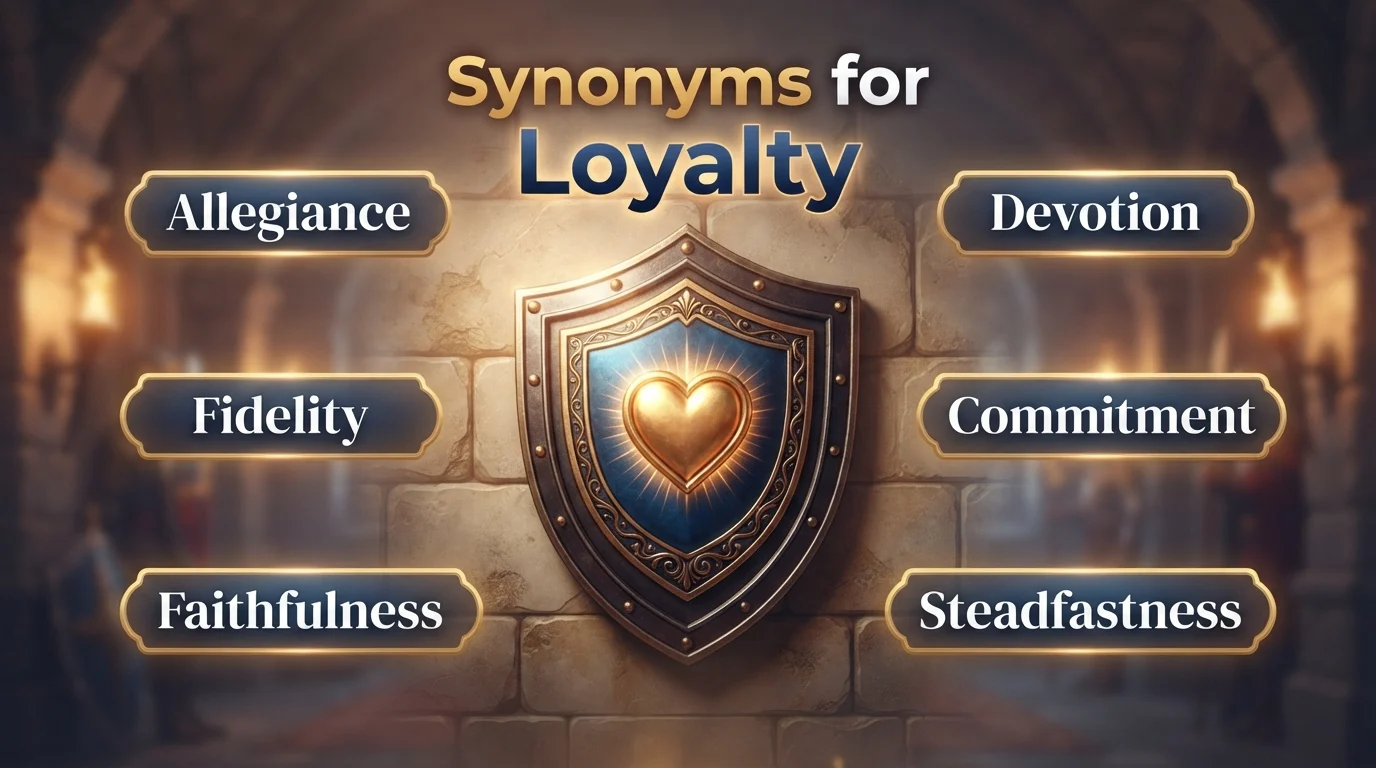
Do you keep using the word “loyalty” in essays, business reports, creative writing, professional communication, or everyday conversation? While it is a powerful and meaningful word, repeating it can make your writing feel monotonous or lack the nuance needed to describe different types of commitment, allegiance, and faithfulness.
The good news is that the best alternative depends on what you actually mean. You might be describing devotion to a person, allegiance to a country, faithfulness in a relationship, dedication to a cause, or steadfastness in principles.
This guide explains synonyms for “loyalty” by meaning, tone, context, and usage. You will learn which alternatives work best in academic writing, professional communication, creative expression, personal contexts, and casual conversation.
Quick Answer: What Does “Loyalty” Mean?
“Loyalty” refers to a strong feeling of support, allegiance, or faithfulness to a person, group, cause, or country. It involves steadfast commitment, trustworthiness, and devotion. Depending on context, alternatives include allegiance, devotion, fidelity, faithfulness, commitment, dedication, steadfastness, adherence, constancy, and obedience.
Meaning, Tone, and Context
Simple Definition
“Loyalty” generally refers to:
- Personal devotion: faithfulness to a friend, family member, or partner
- Allegiance: commitment to a country, leader, or organization
- Fidelity: faithfulness in relationships or to promises
- Commitment: dedication to a cause, belief, or group
- Steadfastness: unwavering support through difficulties
- Adherence: sticking to principles, rules, or traditions
Part of Speech
“Loyalty” is primarily a noun.
Examples:
- “Her loyalty to her friends is unwavering.”
- “The soldiers swore loyalty to their country.”
Related Forms:
- Loyal (adjective): showing firm support
- Loyally (adverb): in a loyal manner
- Loyalist (noun): a person who remains loyal to a cause or leader
- Disloyal (adjective): not loyal; unfaithful
- Disloyalty (noun): lack of loyalty
Positive, Negative, or Neutral Tone
“Loyalty” is generally positive.
Positive associations:
- “Her loyalty to the team inspired everyone.”
- “His loyalty to his principles never wavered.”
Neutral or complex contexts:
- “Blind loyalty can sometimes be dangerous.”
- “Loyalty to one group may mean conflict with another.”
Formality Level
“Loyalty” is a standard word that works in both formal and informal English. It is appropriate in academic papers, business reports, casual conversation, and creative writing. However, more formal alternatives like allegiance, fidelity, and constancy are often preferred in formal writing.
Common Use Cases
“Loyalty” commonly refers to:
- Personal relationships: friendships, family, romantic partnerships
- National allegiance: patriotism, citizenship, military service
- Organizational commitment: employee loyalty, brand loyalty
- Cause dedication: political, religious, or social commitment
- Moral principles: integrity, honor, trustworthiness
Important Word Forms
- Loyalty (noun): the state of being loyal
- Loyal (adjective): showing firm support
- Loyally (adverb): in a loyal manner
- Loyalist (noun): a person who remains loyal
- Disloyal (adjective): not loyal
- Disloyalty (noun): lack of loyalty
When and How to Use “Loyalty”
Use “loyalty” when you want to describe steadfast support, faithfulness, or commitment to someone or something.
Professional
“Employee loyalty is essential for long-term business success.”
This works naturally in business communication.
Academic
“The study examined brand loyalty among millennial consumers.”
The term is appropriate in academic research.
Personal
“Her loyalty to her family is unwavering.”
The word sounds natural in everyday conversation.
Creative
“The knight’s loyalty to his king was legendary.”
The term works well in storytelling and creative writing.
Political
“Citizens pledge loyalty to their country.”
This is standard political language.
Business
“Customer loyalty programs are designed to reward repeat customers.”
Here, “loyalty” describes consumer behavior.
Another Word for “Loyalty”
There is no single perfect synonym because “loyalty” can refer to many different types of commitment.
- Personal devotion: devotion, faithfulness, fidelity, allegiance
- National allegiance: patriotism, allegiance, fealty, devotion
- Relationship fidelity: faithfulness, fidelity, constancy, commitment
- Organizational commitment: dedication, commitment, allegiance
- Moral steadfastness: steadfastness, integrity, honor, reliability
- Adherence to rules: adherence, observance, obedience
- Emotional support: support, devotion, dedication
If you need one broad alternative, “allegiance” works for formal or national contexts, “devotion” for personal commitment, and “fidelity” for relationship faithfulness.
When Not to Use “Loyalty”
“Loyalty” can become too broad or vague when you need to specify what kind of loyalty you are describing.
Consider:
“He showed loyalty.”
This statement does not tell readers whether he was loyal to a person, a cause, a country, or a company.
A more precise sentence could be:
“He showed unwavering loyalty to his country during the crisis.”
“Her loyalty to her friends never wavered.”
Similarly, avoid using “loyalty” when you mean “obedience” in contexts involving authority.
Words Commonly Confused With “Loyalty”
Loyalty vs. Allegiance
Allegiance emphasizes commitment to a country, leader, or cause, often in a formal or political context. Loyalty is broader.
Example:
“The soldiers pledged allegiance to the flag.” (formal, national)
“Her loyalty to her friends was unquestionable.” (personal)
Loyalty vs. Devotion
Devotion emphasizes deep affection and dedication, often with an emotional or religious connotation. Loyalty is more about faithfulness.
Example:
“Her devotion to her family was evident.” (affection)
“His loyalty to the company was rewarded.” (faithfulness)
Loyalty vs. Fidelity
Fidelity specifically emphasizes faithfulness in relationships or to promises. Loyalty is broader.
Example:
“Fidelity in marriage is essential.” (relationship)
“Loyalty to the team is important.” (general)
Loyalty vs. Commitment
Commitment emphasizes dedication to a task or goal. Loyalty emphasizes faithfulness to a person or group.
Example:
“Her commitment to the project was impressive.” (task)
“His loyalty to his friends was unwavering.” (person)
Loyalty vs. Faithfulness
Faithfulness is nearly synonymous with loyalty but often emphasizes reliability and trustworthiness in relationships.
Example:
“Her faithfulness to her partner was absolute.” (relationship)
“His loyalty to the cause never wavered.” (cause)
Loyalty vs. Obedience
Obedience means following orders or rules. Loyalty involves voluntary support and faithfulness.
Example:
“The dog showed obedience to its owner.” (following commands)
“The dog showed loyalty to its owner.” (devotion)
Best Synonym by Context for “Loyalty”
| Context | Best Synonym | Why It Works | Example |
|---|---|---|---|
| Formal writing | Allegiance, fidelity | Precise and professional | The citizens pledged allegiance to the nation. |
| Academic writing | Commitment, adherence | Standard academic usage | The study examined organizational commitment. |
| National/patriotic | Allegiance, patriotism, fealty | Emphasizes national devotion | Soldiers swore fealty to the crown. |
| Personal relationships | Devotion, faithfulness, fidelity | Emphasizes emotional commitment | Her devotion to her partner was evident. |
| Business context | Dedication, commitment | Emphasizes organizational loyalty | Employee dedication improved productivity. |
| Brand loyalty | Brand allegiance, consumer commitment | Specific marketing term | The company measured brand allegiance. |
| Moral contexts | Integrity, honor, steadfastness | Emphasizes principles | His integrity earned him respect. |
| Religious contexts | Faithfulness, devotion, piety | Emphasizes spiritual commitment | Her faithfulness to her faith was inspiring. |
| Creative writing | Constancy, steadfastness | Literary and evocative | The knight’s constancy was legendary. |
| Casual conversation | Loyalty (itself), support | Natural and concise | I appreciate your support. |
| Political context | Allegiance, partisanship | Emphasizes political commitment | Party allegiance influenced his vote. |
| Military context | Fealty, allegiance, duty | Formal military term | The soldiers demonstrated unwavering fealty. |
Which Synonym Should You Choose?
Start by identifying what kind of loyalty you are describing.
- Personal relationships: devotion, faithfulness, fidelity, constancy
- National/patriotic: allegiance, patriotism, fealty
- Organizational: dedication, commitment, allegiance
- Moral principles: integrity, honor, steadfastness
- Religious: faithfulness, devotion, piety
- Brand/consumer: brand allegiance, consumer commitment
- Political: allegiance, partisanship, fidelity
10 Key Synonyms for “Loyalty”
The table below includes accurate alternatives with clear meanings and usage contexts.
| Synonym | Simple Meaning | Best Used For | Example Sentence |
|---|---|---|---|
| Allegiance | Loyalty to a country, leader, or cause | Formal, national, political | The soldiers pledged allegiance to their country. |
| Devotion | Deep affection and dedication | Personal, religious | Her devotion to her family was unwavering. |
| Fidelity | Faithfulness to a person or promise | Relationships, formal | He demonstrated fidelity to his partner. |
| Faithfulness | Reliability and trustworthiness | Relationships, religious | Her faithfulness to her friends was inspiring. |
| Commitment | Dedication to a task or goal | Professional, personal | His commitment to the project was impressive. |
| Dedication | Devotion to a purpose or task | Professional, personal | Her dedication to teaching was evident. |
| Steadfastness | Unwavering support or resolve | Moral, formal | His steadfastness during the crisis was admirable. |
| Constancy | Unchanging faithfulness | Literary, formal | The constancy of her love was remarkable. |
| Adherence | Sticking to rules or beliefs | Formal, technical | His adherence to tradition was strict. |
| Fealty | Formal loyalty to a lord or cause | Historical, formal | The knights swore fealty to the king. |
Synonym Groups and Usage Differences
Professional vs. Personal Synonyms
Professional writing benefits from specific terms such as dedication, commitment, adherence, and allegiance.
Personal communication often uses loyalty itself or casual alternatives like support, devotion, or backing.
Compare:
“I appreciate your loyalty.” (personal)
“Her dedication to the organization is commendable.” (professional)
Formal vs. Conversational Synonyms
Loyalty works in both formal and conversational English.
Formal alternatives: allegiance, fidelity, constancy, fealty
Conversational alternatives: loyalty, support, backing, sticking by someone
Examples:
“The citizens pledged allegiance to the nation.” (formal)
“I’ll always stick by you.” (conversational)
Academic Synonyms
Academic writing should distinguish between loyalty (general), commitment (dedication to a goal), allegiance (formal/political), and adherence (sticking to rules).
For example:
“The study examined organizational commitment among employees.”
“Brand allegiance was measured through repeat purchase behavior.”
Professional and Business Synonyms
Business writing often benefits from phrases such as employee dedication, customer commitment, brand allegiance, and organizational loyalty.
Instead of:
“Customer loyalty is important.”
Consider:
“Customer allegiance is critical for long-term revenue growth.”
Creative or Literary Synonyms
Creative writing can use devotion, constancy, steadfastness, fealty, faithfulness, and fidelity.
For example:
“The knight’s fealty to his king never wavered.”
“Her constancy in the face of adversity was inspiring.”
Slang or Modern Synonyms
Ride or die means extremely loyal (slang).
Stand by means to support loyally.
Have someone’s back means to support and defend someone.
Loyal to the soil means loyal to one’s origins.
Examples:
“She’s my ride or die.” (slang, extremely loyal)
“I’ll always have your back.” (support)
Strongest vs. Weaker Synonyms
“Loyalty” synonyms vary in intensity:
Milder: support, commitment
Moderate: loyalty, devotion, dedication
Strong: fidelity, faithfulness, allegiance
Very Strong: fealty, steadfastness, constancy
Emotional vs. Neutral Synonyms
“Loyalty” is generally positive and emotional.
Emotional alternatives: devotion, faithfulness, love
Neutral alternatives: commitment, adherence, allegiance
Examples:
“Her devotion to him was undeniable.” (emotional)
“His adherence to the rules was strict.” (neutral)
Antonyms of “Loyalty”
“Loyalty” has several antonyms depending on context:
| Antonym | Context | Meaning | Example Sentence |
|---|---|---|---|
| Disloyalty | General | Lack of loyalty | His disloyalty was a betrayal. |
| Betrayal | Personal | Breaking trust | The betrayal ended their friendship. |
| Treachery | Formal | Willful betrayal | The treachery was discovered too late. |
| Treason | National | Betrayal of country | He was charged with treason. |
| Infidelity | Relationships | Unfaithfulness | Infidelity destroyed their marriage. |
| Perfidy | Formal | Deliberate breach of trust | The perfidy of the act shocked everyone. |
| Faithlessness | General | Lack of faithfulness | His faithlessness hurt those who trusted him. |
| Duplicity | General | Deceitful behavior | The duplicity of the politician was exposed. |
Comparison: “Loyalty” vs. Similar Words
Loyalty vs. Allegiance
Main difference: Allegiance is more formal and often refers to national or political commitment. Loyalty is broader.
Examples:
“The soldiers pledged allegiance to the flag.” (formal, national)
“Her loyalty to her friends was unwavering.” (personal)
Loyalty vs. Devotion
Main difference: Devotion emphasizes deep affection and dedication, often with emotional or religious connotations. Loyalty emphasizes faithfulness.
Examples:
“Her devotion to her family was evident.” (affection)
“His loyalty to the company was rewarded.” (faithfulness)
Loyalty vs. Fidelity
Main difference: Fidelity specifically emphasizes faithfulness in relationships or to promises. Loyalty is broader.
Examples:
“Fidelity in marriage is essential.” (relationship)
“Loyalty to the team is important.” (general)
Loyalty vs. Commitment
Main difference: Commitment emphasizes dedication to a task or goal. Loyalty emphasizes faithfulness to a person or group.
Examples:
“Her commitment to the project was impressive.” (task)
“His loyalty to his friends was unwavering.” (person)
Loyalty vs. Obedience
Main difference: Obedience means following orders or rules. Loyalty involves voluntary support and faithfulness.
Examples:
“The dog showed obedience to its owner.” (following commands)
“The dog showed loyalty to its owner.” (devotion)
Common Phrases and Expressions with “Loyalty”
1. Brand loyalty
Meaning:
Consumers’ tendency to consistently buy from the same brand.
Example:
“Apple has built incredible brand loyalty.”
2. Customer loyalty
Meaning:
The tendency of customers to continue doing business with a company.
Example:
“The rewards program increased customer loyalty.”
3. Employee loyalty
Meaning:
The commitment of employees to their organization.
Example:
“Employee loyalty has declined in recent years.”
4. Loyalty program
Meaning:
A rewards program designed to encourage repeat business.
Example:
“The airline’s loyalty program offers free flights.”
5. Blind loyalty
Meaning:
Unquestioning loyalty, often without regard for right or wrong.
Example:
“Blind loyalty can lead to poor decisions.”
6. Loyalty oath
Meaning:
A formal pledge of allegiance.
Example:
“Government employees must take a loyalty oath.”
7. Undivided loyalty
Meaning:
Complete, total loyalty.
Example:
“She gave her undivided loyalty to the cause.”
8. Fealty
Meaning:
Formal loyalty to a lord or cause.
Example:
“The knights swore fealty to the king.”
9. Loyalty test
Meaning:
A situation that tests someone’s loyalty.
Example:
“The crisis was a loyalty test for the team.”
10. Split loyalty
Meaning:
Loyalty divided between two parties.
Example:
“His split loyalty caused inner conflict.”
Common Mistakes to Avoid
1. Using “loyalty” when “obedience” is meant
Obedience means following orders. Loyalty involves voluntary support.
Incorrect: “The dog showed loyalty to its owner’s commands.” (should be obedience)
Correct: “The dog showed loyalty to its owner.” (devotion)
2. Confusing “loyalty” with “allegiance” in casual contexts
Allegiance is more formal. Loyalty works in both.
Formal: “They pledged allegiance to the crown.”
Casual: “I appreciate your loyalty.”
3. Using “loyalty” when “commitment” is more precise
Commitment emphasizes dedication to a task. Loyalty emphasizes faithfulness to a person or group.
Vague: “Her loyalty to the project was impressive.” (better: commitment)
Precise: “Her commitment to the project was impressive.”
4. Overusing “loyalty” in writing
Repetition can make content feel dull. Use alternatives such as allegiance, devotion, fidelity, commitment, dedication, and steadfastness.
5. Using “loyalty” in contexts where “faithfulness” is more appropriate
Faithfulness often emphasizes reliability in relationships.
Relationship context: “Her faithfulness to her partner was absolute.” (better than loyalty)
6. Confusing “loyalty” with “brand allegiance”
Brand allegiance is a marketing term for consumer loyalty to a brand. Loyalty is broader.
Marketing: “The company measured brand allegiance.”
General: “His loyalty to the brand was unwavering.”
FAQs
What is the best synonym for “loyalty”?
The best synonym depends on context. Allegiance works for formal or national contexts, devotion for personal commitment, fidelity for relationship faithfulness, commitment for professional contexts, and steadfastness for moral contexts.
What is a formal synonym for “loyalty”?
Allegiance, fidelity, fealty, constancy, and steadfastness are formal synonyms.
What is an informal synonym for “loyalty”?
Support, backing, sticking by someone, and ride or die (slang) are common informal alternatives.
What is another word for “loyalty” in a relationship?
Devotion, faithfulness, fidelity, and constancy work well in relationship contexts.
What is the difference between “loyalty” and “allegiance”?
Allegiance is more formal and often refers to national or political commitment. Loyalty is broader and can be personal.
What is the opposite of “loyalty”?
Depending on context, opposites include disloyalty, betrayal, treachery, treason, infidelity, and faithlessness.
What does “loyalty” mean in a business context?
In business, loyalty often refers to customer loyalty (repeat purchasing) or employee loyalty (commitment to the organization).
Conclusion
“Loyalty” is a powerful word that can describe personal devotion, national allegiance, relationship fidelity, organizational commitment, and moral steadfastness. The best synonym depends on what you actually mean.
Choose allegiance for national or formal contexts, devotion for personal commitment, fidelity for relationship faithfulness, commitment for professional contexts, dedication for task-oriented loyalty, steadfastness for moral contexts, and fealty for historical or formal contexts.
