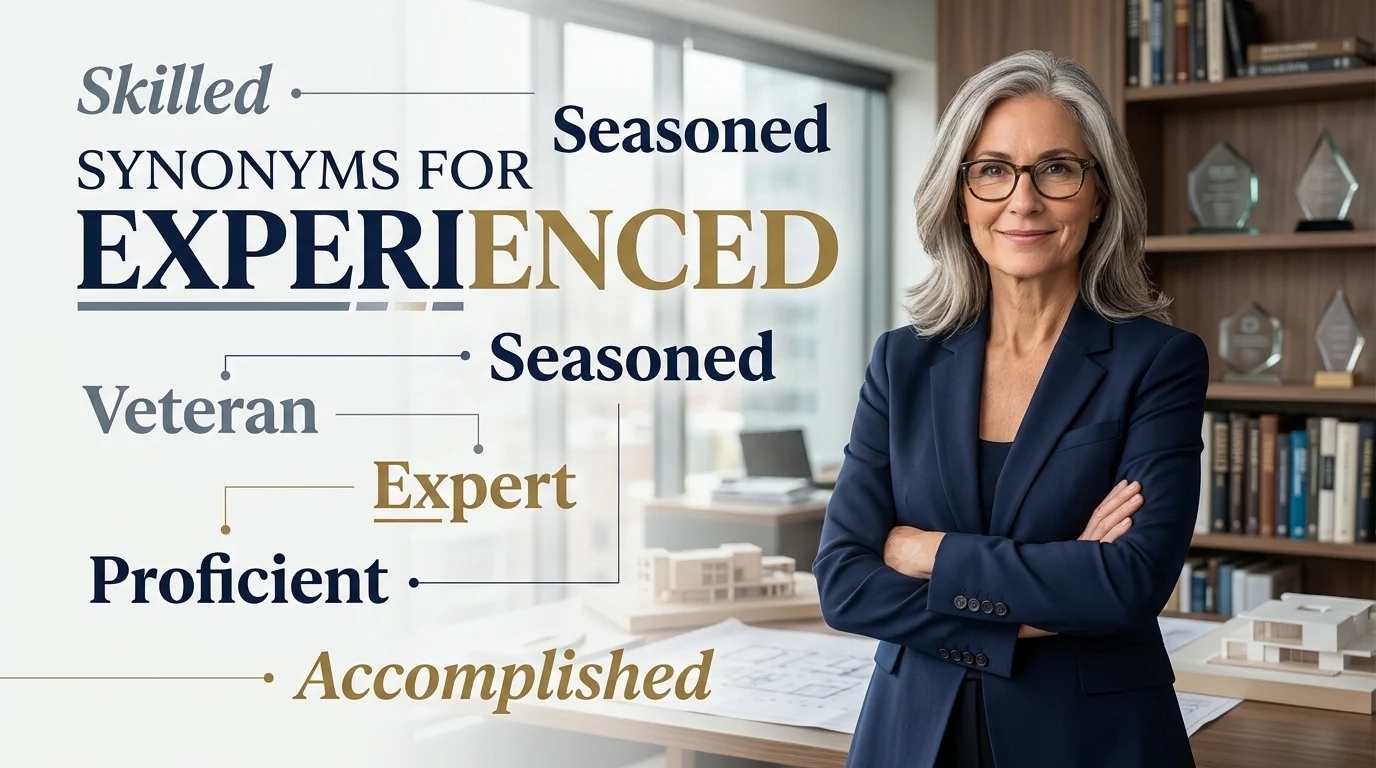
Do you keep using the word “experienced” in resumes, cover letters, business reports, performance reviews, or everyday conversation? While it is one of the most useful and professional adjectives in English, repeating it can make your writing feel flat, generic, or overly reliant on a single term.
The good news is that the best alternative depends on what you actually mean. You might be describing someone who is skilled, seasoned, veteran, expert, practiced, or well-versed in a particular field.
This guide explains synonyms for “experienced” by meaning, tone, context, and usage. You will learn which alternatives work best in academic writing, professional communication, resumes, creative expression, and casual conversation.
Quick Answer: What Does “Experienced” Mean?
“Experienced” describes someone who has gained knowledge, skill, or judgment through direct participation in activities or events over time. It suggests competence, familiarity, and proficiency. Depending on context, alternatives include skilled, seasoned, veteran, expert, practiced, accomplished, proficient, well-versed, knowledgeable, and adept.
Meaning, Tone, and Context
Simple Definition
“Experienced” generally refers to someone who is:
- Skilled: having developed abilities through practice
- Seasoned: having a lot of experience over time
- Veteran: having long service or extensive experience
- Expert: having comprehensive knowledge or skill
- Practiced: having repeated an activity enough to be proficient
- Accomplished: having achieved a high level of skill
- Well-versed: familiar with a subject through experience
Part of Speech
“Experienced” functions primarily as an adjective and as the past tense of the verb “experience.”
Adjective Examples:
- “She is an experienced teacher.”
- “The team is highly experienced.”
Verb Examples:
- “She experienced great success in her career.”
- “He experienced difficulties during the project.”
Related Forms:
- Experience (noun/verb): knowledge gained through practice; to undergo
- Inexperienced (adjective): lacking experience
- Experiential (adjective): relating to experience
- Experientially (adverb): through experience
Positive, Negative, or Neutral Tone
“Experienced” is generally positive. It suggests competence, reliability, and knowledge.
Positive associations:
- “She is an experienced professional with a proven track record.”
- “We need someone experienced to lead the team.”
Neutral contexts:
- “The sample included experienced and inexperienced participants.”
- “Experienced users may skip the tutorial.”
Formality Level
“Experienced” is a standard word that works in both formal and informal English. It is especially common in resumes, job descriptions, performance reviews, and professional profiles.
However, more specific alternatives can add precision and variety depending on the context.
Common Use Cases
“Experienced” commonly refers to:
- Workplace: experienced manager, experienced professional, experienced team
- Education: experienced teacher, experienced educator, experienced trainer
- Sports: experienced athlete, experienced player, experienced coach
- Medicine: experienced surgeon, experienced nurse, experienced clinician
- Technology: experienced developer, experienced engineer, experienced user
- Life: experienced traveler, experienced parent, experienced mentor
Important Word Forms
- Experienced (adjective): having knowledge or skill from practice
- Experience (noun/verb): knowledge gained through practice; to undergo
- Inexperienced (adjective): lacking experience
- Experiential (adjective): relating to experience
- Experientially (adverb): through experience
When and How to Use “Experienced”
Use “experienced” when you want to describe someone who has gained knowledge or skill through practice. Because the word is broad, more specific alternatives can add precision depending on the context.
Professional (Resume)
“Experienced project manager with 10+ years in the technology sector.”
This is standard in resumes and cover letters.
Academic
“The study compared experienced and novice teachers.”
The term is appropriate in academic research.
Business
“We are looking for an experienced leader to guide the team.”
This works naturally in business communication.
Personal
“She is an experienced traveler who knows how to navigate foreign cities.”
The word sounds natural in everyday conversation.
Sports
“The team relies on its experienced players during critical moments.”
This is standard in sports reporting.
Medical
“The surgery was performed by an experienced specialist.”
This is appropriate in medical contexts.
Another Word for “Experienced”
There is no single perfect synonym because “experienced” can refer to skill, seniority, expertise, practice, or familiarity.
- Skill context: skilled, proficient, adept, accomplished
- Seniority context: seasoned, veteran, senior, long-serving
- Expertise context: expert, master, authority, specialist
- Practice context: practiced, trained, drilled, rehearsed
- Familiarity context: well-versed, knowledgeable, familiar, conversant
If you need one broad alternative, “seasoned” works for seniority, “skilled” works for ability, and “expert” works for deep knowledge.
When Not to Use “Experienced”
“Experienced” can become too vague when you need to specify exactly what kind of experience you are describing.
Consider:
“She is experienced.”
This statement does not tell readers what she is experienced in, how long she has been doing it, or what level of expertise she has.
A more precise sentence could be:
“She is an experienced litigation attorney with 15 years of courtroom practice.”
Similarly, avoid using “experienced” when you mean “expert” in a context requiring deep mastery. Use “expert” or “authority” instead.
Words Commonly Confused With “Experienced”
Experienced vs. Skilled
Skilled emphasizes developed ability. Experienced emphasizes knowledge gained over time.
Example:
“She is a skilled pianist.” (ability)
“She is an experienced performer.” (time and practice)
Experienced vs. Seasoned
Seasoned emphasizes long experience and maturity. Experienced is broader.
Example:
“He is a seasoned diplomat.” (long experience)
“He is an experienced diplomat.” (general)
Experienced vs. Expert
Expert implies comprehensive, authoritative knowledge. Experienced implies familiarity through practice.
Example:
“She is an expert in neuroscience.” (authoritative)
“She is experienced in neuroscience research.” (practiced)
Experienced vs. Veteran
Veteran emphasizes long service, often in military or professional contexts. Experienced is broader.
Example:
“He is a veteran journalist.” (long service)
“He is an experienced journalist.” (general)
Experienced vs. Proficient
Proficient emphasizes competence at a specific skill. Experienced is broader.
Example:
“She is proficient in Spanish.” (competence)
“She is experienced in international business.” (general)
Experienced vs. Accomplished
Accomplished emphasizes achievement and recognition. Experienced emphasizes time and practice.
Example:
“She is an accomplished violinist.” (achievement)
“She is an experienced violinist.” (practice)
Best Synonym by Context for “Experienced”
| Context | Best Synonym | Why It Works | Example |
|---|---|---|---|
| Formal writing | Seasoned, accomplished | Precise and professional | She is a seasoned executive with global experience. |
| Academic writing | Expert, proficient | Standard academic usage | The study compared expert and novice performers. |
| Business/Professional | Seasoned, veteran, senior | Professional and clear | We need a seasoned leader for this role. |
| Resume | Accomplished, skilled, seasoned | Action-oriented | Accomplished marketing professional with 10 years of experience. |
| Sports | Veteran, seasoned | Sports reporting | The veteran player led the team to victory. |
| Medical | Expert, seasoned | Medical context | The surgery was performed by an expert surgeon. |
| Creative writing | Practiced, adept, masterful | Adds literary depth | She was an adept negotiator. |
| Casual conversation | Experienced, seasoned | Natural and simple | He’s pretty experienced at this. |
| Technology | Proficient, skilled | Technical context | She is proficient in Python and Java. |
| Leadership | Seasoned, veteran | Leadership context | The veteran manager guided the team. |
| Teaching | Experienced, seasoned | Education context | The seasoned teacher knew how to engage students. |
| Mentorship | Wise, seasoned | Mentor context | He is a wise and seasoned mentor. |
Which Synonym Should You Choose?
Start by identifying what kind of experience you are describing.
- Skill: skilled, proficient, adept, accomplished
- Seniority: seasoned, veteran, senior, long-serving
- Expertise: expert, master, authority, specialist
- Practice: practiced, trained, drilled, rehearsed
- Familiarity: well-versed, knowledgeable, familiar, conversant
10 Key Synonyms for “Experienced”
The table below includes accurate alternatives with clear meanings and usage contexts.
| Synonym | Simple Meaning | Best Used For | Example Sentence |
|---|---|---|---|
| Skilled | Having developed ability | General, professional | She is a skilled negotiator. |
| Seasoned | Having long experience | Professional, senior | He is a seasoned executive. |
| Veteran | Having long service | Sports, military, professional | The veteran coach led the team. |
| Expert | Having deep knowledge | Professional, academic | She is an expert in her field. |
| Practiced | Having repeated an activity | Performance, skill | He is a practiced public speaker. |
| Accomplished | Having achieved recognition | Creative, professional | She is an accomplished author. |
| Proficient | Competent at a skill | Technical, academic | He is proficient in three languages. |
| Well-versed | Familiar with a subject | Academic, professional | She is well-versed in contract law. |
| Knowledgeable | Having information and understanding | General, professional | He is knowledgeable about the industry. |
| Adept | Highly skilled | General, creative | She is adept at problem-solving. |
Synonym Groups and Usage Differences
Professional vs. Personal Synonyms
Professional writing benefits from specific terms such as seasoned, veteran, accomplished, proficient, and well-versed.
Personal communication often uses experienced itself or casual alternatives like skilled, good at, or knows their stuff.
Compare:
“He’s pretty experienced at this.” (personal)
“He is a seasoned professional with extensive industry experience.” (professional)
Formal vs. Conversational Synonyms
Experienced works in both formal and conversational English.
Formal alternatives: seasoned, accomplished, proficient, well-versed
Conversational alternatives: skilled, good at, knows their stuff
Examples:
“She is a seasoned diplomat.” (formal)
“She’s really good at her job.” (conversational)
Academic Synonyms
Academic writing should distinguish between experienced (general), expert (authoritative), proficient (competent), and novice (beginner).
For example:
“The study compared expert and novice performers.”
“Participants were proficient in the target language.”
Professional and Business Synonyms
Business writing often benefits from phrases such as seasoned, veteran, accomplished, proven, and results-driven.
Instead of:
“She is experienced.”
Consider:
“She is a seasoned professional with a proven track record in leading high-performing teams.”
Creative or Literary Synonyms
Creative writing can use practiced, adept, masterful, consummate, and time-tested depending on the context.
For example:
“She was an adept negotiator who could read any room.”
“He was a consummate professional in every sense.”
Slang or Modern Synonyms
Knows their stuff is casual for experienced.
Been around the block is slang for experienced.
Old hand is informal for experienced.
Pro is casual for professional.
Examples:
“She really knows her stuff.” (casual)
“He’s an old hand at this.” (informal)
Strongest vs. Weaker Synonyms
“Experienced” synonyms vary in intensity:
Milder: familiar, knowledgeable
Moderate: experienced, skilled, practiced
Strong: seasoned, veteran, proficient
Very Strong: expert, master, accomplished
Emotional vs. Neutral Synonyms
“Experienced” is generally neutral or positive.
Emotional alternatives: masterful, consummate (positive)
Neutral alternatives: experienced, skilled, proficient
Examples:
“She is a consummate professional.” (positive, emphatic)
“She is an experienced professional.” (neutral)
Antonyms of “Experienced”
“Experienced” has several antonyms depending on context:
| Antonym | Context | Meaning | Example Sentence |
|---|---|---|---|
| Inexperienced | General | Lacking experience | He is inexperienced in management. |
| Novice | General | A beginner | She is a novice at chess. |
| Amateur | General | Not professional | He is an amateur photographer. |
| Green | General | Lacking experience | She is still green in the industry. |
| Untrained | Skill | Not trained | The untrained staff struggled. |
| Unpracticed | Skill | Not practiced | His unpracticed skills showed. |
| Unseasoned | Seniority | Not seasoned | The unseasoned team needed guidance. |
Comparison: “Experienced” vs. Similar Words
Experienced vs. Skilled
Main difference: Skilled emphasizes developed ability. Experienced emphasizes knowledge gained over time.
Examples:
“She is a skilled pianist.” (ability)
“She is an experienced performer.” (time and practice)
Experienced vs. Seasoned
Main difference: Seasoned emphasizes long experience and maturity. Experienced is broader.
Examples:
“He is a seasoned diplomat.” (long experience)
“He is an experienced diplomat.” (general)
Experienced vs. Expert
Main difference: Expert implies comprehensive, authoritative knowledge. Experienced implies familiarity through practice.
Examples:
“She is an expert in neuroscience.” (authoritative)
“She is experienced in neuroscience research.” (practiced)
Experienced vs. Veteran
Main difference: Veteran emphasizes long service, often in military or professional contexts. Experienced is broader.
Examples:
“He is a veteran journalist.” (long service)
“He is an experienced journalist.” (general)
Experienced vs. Proficient
Main difference: Proficient emphasizes competence at a specific skill. Experienced is broader.
Examples:
“She is proficient in Spanish.” (competence)
“She is experienced in international business.” (general)
Experienced vs. Accomplished
Main difference: Accomplished emphasizes achievement and recognition. Experienced emphasizes time and practice.
Examples:
“She is an accomplished violinist.” (achievement)
“She is an experienced violinist.” (practice)
Common Phrases and Expressions with “Experienced”
1. Highly experienced
Meaning:
Having a great deal of experience.
Example:
“She is a highly experienced attorney.”
2. Experienced in
Meaning:
Having experience with a particular field or activity.
Example:
“He is experienced in crisis management.”
3. Experienced professional
Meaning:
A person with professional experience.
Example:
“We are hiring an experienced professional.”
4. Experienced hand
Meaning:
A person with practical experience.
Example:
“She is an experienced hand at negotiation.”
5. Seasoned veteran
Meaning:
Someone with long experience.
Example:
“The seasoned veteran led the team.”
6. Proven track record
Meaning:
A history of success.
Example:
“She has a proven track record in sales.”
7. Well-versed in
Meaning:
Familiar with a subject.
Example:
“He is well-versed in contract law.”
8. Old hand
Meaning:
An experienced person.
Example:
“He’s an old hand at this game.”
9. Been around
Meaning:
Having a lot of experience.
Example:
“She’s been around long enough to know the ropes.”
10. Knows the ropes
Meaning:
Familiar with how things work.
Example:
“He knows the ropes after 20 years in the industry.”
Common Mistakes to Avoid
1. Using “experienced” when a more precise term is available
If you mean expert, seasoned, proficient, or accomplished, use the more specific word.
Vague: “She is experienced.”
Precise: “She is a seasoned professional with 15 years of leadership experience.”
2. Confusing “experienced” with “expert”
Expert implies authoritative knowledge. Experienced implies familiarity through practice.
Incorrect: “She is experienced in neuroscience.” (if a leading authority)
Correct: “She is an expert in neuroscience.”
3. Using “experienced” in resumes without specifics
Resumes benefit from concrete details.
Vague: “Experienced manager.”
Specific: “Accomplished manager with 10 years of experience leading cross-functional teams.”
4. Overusing “experienced” in writing
Repetition can make content feel dull. Use alternatives such as seasoned, veteran, accomplished, proficient, and well-versed.
5. Choosing a synonym that changes the meaning
Do not replace experienced with expert unless you mean authoritative knowledge.
Do not replace experienced with skilled unless you mean developed ability.
FAQs
What is the best synonym for “experienced”?
The best synonym depends on context. Seasoned works for seniority, skilled for ability, expert for deep knowledge, veteran for long service, and proficient for competence.
What is a formal synonym for “experienced”?
Seasoned, accomplished, proficient, well-versed, and adept are formal synonyms.
What is an informal synonym for “experienced”?
Knows their stuff, been around the block, old hand, and pro are common informal alternatives.
What is another word for “experienced” in a resume?
Accomplished, seasoned, skilled, proven, and results-driven work well in resumes.
What is the difference between “experienced” and “expert”?
Expert implies authoritative knowledge. Experienced implies familiarity through practice.
What is the opposite of “experienced”?
Depending on context, opposites include inexperienced, novice, amateur, green, and untrained.
What does “experienced” mean in a professional context?
In a professional context, experienced often means having a proven track record, relevant skills, and years of practice in a field.
Conclusion
“Experienced” is a versatile and professional word that can describe skill, seniority, expertise, practice, and familiarity. The best synonym depends on what you actually mean.
Choose skilled for ability, seasoned for seniority, veteran for long service, expert for deep knowledge, proficient for competence, and accomplished for achievement.
Most importantly, do not replace “experienced” simply to avoid repetition. First identify what kind of experience—skill, seniority, or expertise—you are actually describing. Then choose the alternative that communicates that idea most clearly.
For academic, professional, and formal writing, precision is usually more valuable than vocabulary variety. A specific term such as seasoned, accomplished, proficient, or well-versed can tell readers much more than the broad word experienced.
Before publishing a vocabulary guide, verify definitions and usage with trusted dictionaries such as Cambridge, Oxford, Merriam-Webster, Collins, or Britannica. This helps ensure that each alternative accurately matches its intended meaning and context.
The practical takeaway is simple: when “experienced” feels too general, ask yourself what kind of experience—skill, seniority, expertise, or familiarity—you are actually describing. Then use the most precise word available
