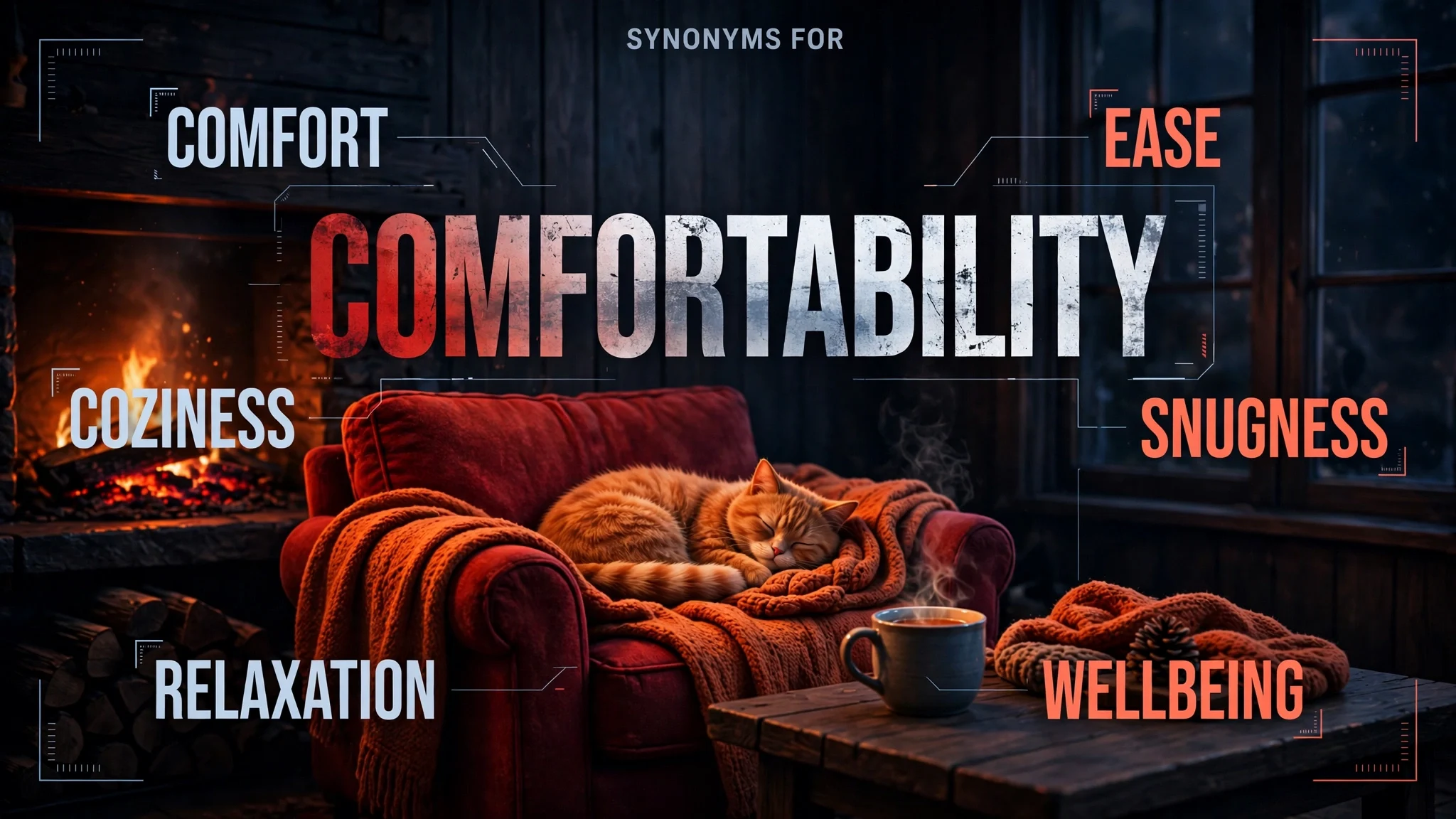
“Comfortability” is one of those words that sounds perfectly clear, yet makes some readers pause. It usually means how comfortable something feels: a chair, a room, a pair of shoes or a working arrangement. The catch is that “comfort” itself is often simpler, stronger and more widely accepted.
So when should you keep “comfortability”, and when should you swap it for “comfort”, “ease” or “cosiness”? This guide explains the word, its tone, its closest alternatives and the contexts where each one works best, from product reviews and interior design to everyday conversation.
What Does “Comfortability” Mean?
Quick Answer: “Comfortability” means the quality or degree of being comfortable: how easy, pleasant and physically at ease something feels. The best alternatives are comfort, ease, cosiness, snugness, relaxation, convenience, pleasantness, wellbeing and contentment, depending on the context.
The greatest wealth is to live content with little.
Plato
Meaning, Tone, and Context
Simple Definition
“Comfortability” generally refers to:
- Physical ease: how soft, supportive or pain-free something feels.
- A sense of being at ease: feeling relaxed rather than tense or awkward.
- Usability: how easy a product, space or system is to live with.
- Measured comfort: in design and ergonomics, a level or rating of comfort.
- Emotional ease: feeling safe, welcome and unstressed.
A note on usage: many style guides prefer “comfort” in general writing, while “comfortability” appears more often in technical, commercial and product contexts, such as mattress, seating and clothing descriptions. Neither is wrong in the sense of being unintelligible, but “comfort” is the safer default.
Part of Speech
“Comfortability” is a noun, formed from “comfortable” plus “-ity”. Examples:
- “The comfortability of these shoes is impressive.”
- “We rated the hotel mainly on comfortability.”
- “Designers tested the chair for comfortability.”
Related forms include “comfort” (noun and verb), “comfortable” (adjective), “comfortably” (adverb), “comforting” (adjective) and “discomfort” (noun).
Positive, Negative, or Neutral Tone
“Comfortability” is positive and neutral: it describes a desirable quality. It can sound slightly formal or technical, and in casual writing it can feel a little clunky, which is another reason “comfort” or “cosiness” often reads better.
Formality Level
The word is acceptable in product, business and technical writing, but it is less common in polished literary or academic prose, where “comfort” is preferred. In a review, a specification sheet or a customer survey, “comfortability” sounds natural enough.
Common Use Cases
- Product reviews: shoes, chairs, mattresses and headphones.
- Interior design: rooms, seating and lighting.
- Travel: seats, cabins and hotel rooms.
- Workplaces: desks, schedules and dress codes.
- Clothing: fit, fabric and wear over a long day.
- Customer feedback: surveys asking how comfortable something felt.
Important Word Forms
- Comfortability (noun): the quality of being comfortable.
- Comfort (noun/verb): ease, or to ease someone.
- Comfortable (adjective): feeling or giving comfort.
- Comfortably (adverb): in a comfortable way.
- Discomfort (noun): lack of comfort.
When and How to Use “Comfortability”
Use “comfortability” when you are talking about a measurable or comparable quality, especially in reviews and specifications. Use “comfort” when you want a shorter, more natural sentence.
Academic
“The study measured comfortability across three seating designs.” Acceptable in applied research, though “comfort” may still be preferred.
Social
“The comfortability of that sofa won me over.” Understandable, but “The comfort of that sofa won me over” sounds smoother.
Literary
“The room’s comfortability faded as the evening grew cold.” Literary writing would more often say “comfort” or “cosiness”.
Creative
“She chose the cottage for its comfortability, not its size.” Works in character-driven description, especially with a practical narrator.
Casual
“Honestly, the comfortability is the best thing about these trainers.” Casual and clear, even if “comfort” is shorter.
Another Word for “Comfortability”
The best replacement depends on which kind of comfort you mean:
- General: comfort, ease, pleasantness.
- Warm and homely: cosiness, snugness, warmth.
- Relaxed feeling: relaxation, contentment, wellbeing.
- Practical: convenience, usability, suitability.
- Physical: softness, support, cushioning.
If you need one broad alternative, “comfort” is the safest. For a warm room, choose “cosiness”. For a product that is easy to use, choose “ease” or “convenience”.
When Not to Use “Comfortability”
Avoid “comfortability” when a shorter word does the same job, especially in formal essays, literary writing and headlines. Do not use it for emotional support in a serious context: “She offered comfort”, not “comfortability”, is the natural phrasing. Also avoid it when you mean “luxury”: comfort is pleasant ease, while luxury is expensive indulgence.
Words Commonly Confused With “Comfortability”
Comfortability vs. Comfort
“Comfort” is the general, widely used word. “Comfortability” stresses the quality or degree of comfort. Example: “The chair offers great comfort.” / “We compared the comfortability of three chairs.”
Comfortability vs. Cosiness
Cosiness is warm, intimate and homely. Comfortability is broader and more neutral. Example: “The cottage has real cosiness.” / “The hotel room scored well for comfortability.”
Comfortability vs. Convenience
Convenience is about ease of use and saving effort. Comfortability is about feeling at ease. Example: “The location is convenient.” / “The seat is comfortable.”
Comfortability vs. Luxury
Luxury implies expense and indulgence. Comfortability does not. Example: “The room was luxurious.” / “The room was comfortable.”
Comfortability vs. Relaxation
Relaxation is the state of being relaxed. Comfortability is the quality that helps produce it. Example: “She enjoyed total relaxation.” / “The bed’s comfortability helped her relax.”
Comfortability vs. Wellbeing
Wellbeing is overall health and happiness. Comfortability is one part of it. Example: “The policy supports staff wellbeing.” / “Better chairs improved comfortability.”
Best Synonym by Context
| Context | Best Synonym | Example |
|---|---|---|
| Product review | Comfort | “The comfort is excellent for long wear.” |
| Home or interior | Cosiness | “The room has real cosiness.” |
| Travel | Ease | “The seat offers ease on long flights.” |
| Workplace | Wellbeing | “The changes support staff wellbeing.” |
| Clothing | Fit | “The fit feels easy all day.” |
| Technical specification | Comfortability | “Comfortability was tested over eight hours.” |
| Customer survey | Comfort level | “Rate the comfort level of the chair.” |
Which Synonym Should You Choose?
Ask what you are really describing. Is it a warm room? Choose “cosiness”. Is it a product you can wear or use all day? Choose “comfort” or “ease”. Is it a feeling of calm? Choose “relaxation” or “contentment”. Is it a score or comparison? Then “comfortability” or “comfort level” makes sense. When in doubt, “comfort” is almost always safe.
10 Key Synonyms for “Comfortability”
| Synonym | Meaning | Example |
|---|---|---|
| Comfort | General ease and pleasantness | “The bed offers real comfort.” |
| Ease | Freedom from difficulty or pain | “She moved with ease.” |
| Cosiness | Warm, homely comfort | “The cottage has cosiness in every room.” |
| Snugness | Close, warm comfort | “The snugness of the blanket was perfect.” |
| Relaxation | State of being relaxed | “The bath brought total relaxation.” |
| Convenience | Ease of use | “The design adds convenience.” |
| Pleasantness | Enjoyable quality | “The pleasantness of the room surprised us.” |
| Wellbeing | Health and happiness | “Good light supports wellbeing.” |
| Contentment | Quiet satisfaction | “She felt contentment by the fire.” |
| Softness | Gentle, yielding feel | “The softness of the fabric stood out.” |
Synonym Groups and Usage Differences
Professional vs. Personal
Professional writing uses “comfort”, “comfort level”, “usability” and “wellbeing”. Personal writing uses “cosiness”, “snugness” and “relaxation”.
Formal vs. Conversational
“Comfort” and “wellbeing” are formal enough for reports. “Cosy”, “snug” and “comfy” are conversational, though “comfy” is informal.
Academic
Academic writing prefers “comfort”, “wellbeing” and “perceived comfort”, with a clear definition of what was measured.
Professional and Business
Business writing uses “comfort”, “convenience”, “usability” and “customer comfort”, especially in reviews, specifications and surveys.
Creative and Literary
Creative writing uses “cosiness”, “warmth”, “contentment” and “snugness” to build atmosphere rather than to rate a product.
Slang and Modern
Modern casual words include “comfy”, “cosy” and “chill”. They suit social media and informal reviews, not formal reports.
Strongest vs. Weaker Alternatives
Strongest, most direct: “comfort”, “ease”. Softer, more atmospheric: “cosiness”, “pleasantness”, “contentment”. More technical: “comfortability”, “usability”.
Emotional vs. Neutral Alternatives
Emotional: “cosiness”, “contentment”, “warmth”. Neutral: “comfort”, “ease”, “convenience”, “usability”. Choose emotional words for atmosphere, neutral words for reviews.
Antonyms for “Comfortability”
| Antonym | Meaning | Example |
|---|---|---|
| Discomfort | Lack of comfort | “The hard seat caused discomfort.” |
| Unease | Feeling unsettled | “She felt unease in the cold room.” |
| Stiffness | Lack of flexibility or softness | “The stiffness of the fabric annoyed him.” |
| Harshness | Rough, unpleasant quality | “The harshness of the light hurt her eyes.” |
| Tension | Mental or physical strain | “The tension eased after the break.” |
| Inconvenience | Trouble or difficulty | “The delay was a real inconvenience.” |
Comfortability vs. Comfort vs. Cosiness: A Closer Comparison
Think of “comfort” as the everyday word, “comfortability” as the measured or compared quality, and “cosiness” as the warm, homely version. A hotel can offer comfort in every room, score highly for comfortability in a survey, and still lack cosiness if the rooms feel cold and impersonal.
In product writing, be specific: name the feature that creates comfort (cushioning, fit, temperature, support or ease of use) rather than repeating “comfortability” in every sentence.
In personal writing, trust the simpler word. “I loved the comfort of that chair” sounds more human than “I loved the comfortability of that chair”.
Common Phrases and Expressions
- Comfort level: “Rate the comfort level of the seat.”
- Home comforts: “She missed the home comforts of her flat.”
- Comfort zone: “Step outside your comfort zone.”
- Too comfortable: “He grew too comfortable in the role.”
- Comfort food: “Soup is classic comfort food.”
- Cosy corner: “She read in her cosy corner.”
- At ease: “The guests were immediately at ease.”
- Snug as a bug: “Under the blanket, he was snug as a bug.”
- Ease of use: “The ease of use impressed reviewers.”
- Feel at home: “The staff made us feel at home.”
Common Mistakes to Avoid
- Using “comfortability” everywhere: “comfort” is shorter and more natural in most sentences.
- Confusing comfort with luxury: a comfortable chair need not be expensive.
- Confusing comfort with convenience: a handy location is convenient, not necessarily comfortable.
- Using “comfortability” for emotional support: say “comfort” when someone needs reassurance.
- Repeating the word: vary it with “ease”, “cosiness” or “fit” where they fit better.
Frequently Asked Questions
What is a comfortability synonym?
A comfortability synonym is another word for how comfortable something feels, such as comfort, ease, cosiness, snugness or relaxation.
What is the closest word to comfortability?
“Comfort” is the closest and most widely used word.
Is comfortability a real word?
Yes, it is used, especially in product and technical writing, but “comfort” is preferred in general and formal writing.
What is a formal synonym for comfortability?
“Comfort” and “wellbeing” are strong formal choices.
What is a casual synonym for comfortability?
“Cosiness”, “comfy” and “snugness” are common casual choices.
Is comfortability the same as luxury?
No. Luxury implies expense and indulgence; comfortability is about feeling at ease.
Should I use comfortability in an essay?
Usually not. Use “comfort” unless you are discussing a measured quality in a technical context.
Conclusion
Comfortability is best understood as a quality to be compared or rated, and most of the time, “comfort” says it more cleanly. For a warm room, choose “cosiness”; for a product, choose “ease” or “convenience”; for a feeling, choose “relaxation” or “contentment”. For a fuller definition, see comfort at Merriam-Webster. You may also enjoy our guides to synonyms for dystopian, synonyms for firmly and synonyms for sovereign. Choose the word that matches the feeling, and your writing will feel as comfortable as the thing you are describing.
